AI's Takeover in Real Estate: From PropTech Tools to Data Center Investment Booms
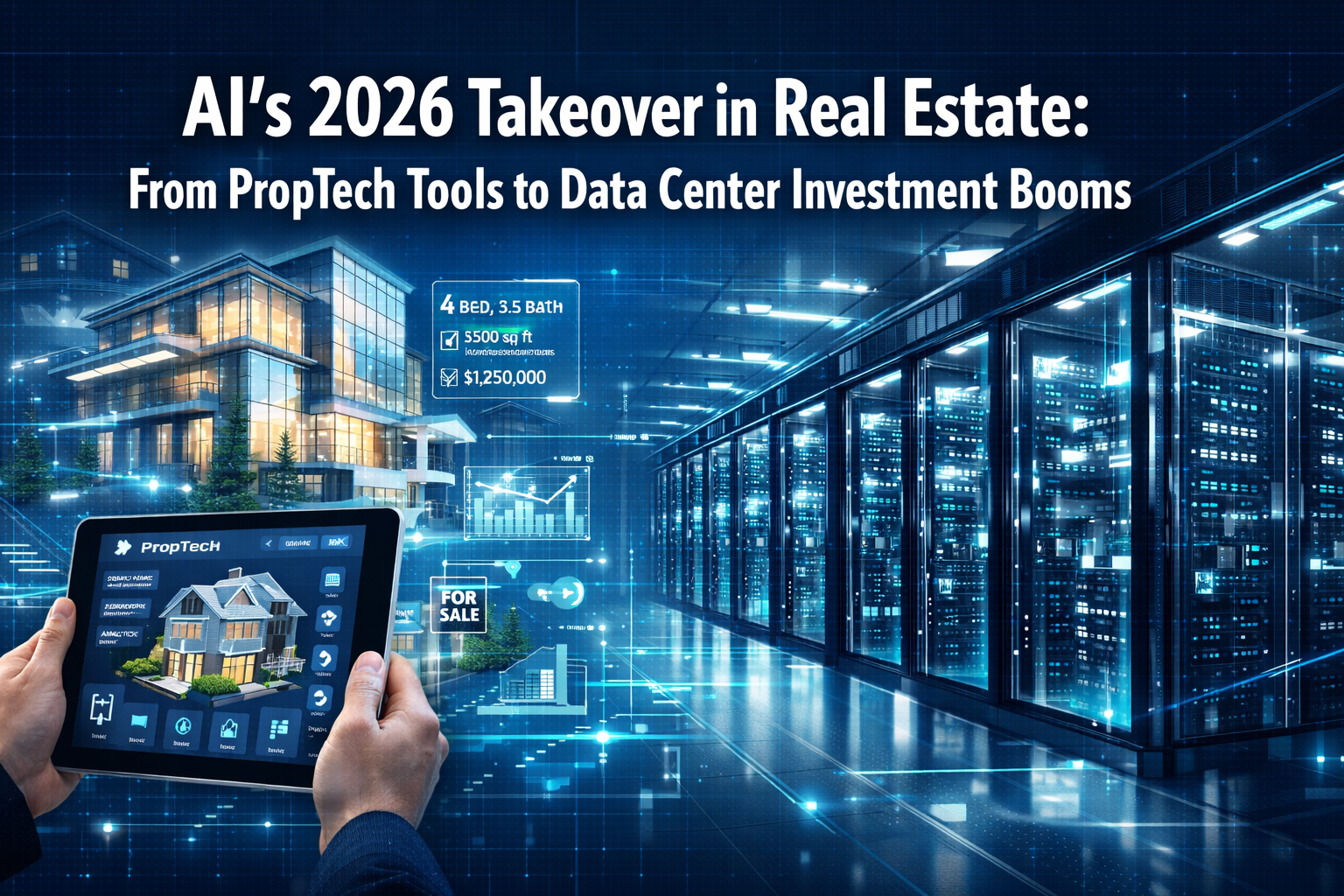
AI's 2026 Takeover in Real Estate: From PropTech Tools to Data Center Investment Booms represents more than incremental technology adoption—it marks a fundamental restructuring of how properties are valued, managed, and invested in

Last updated: February 24, 2026
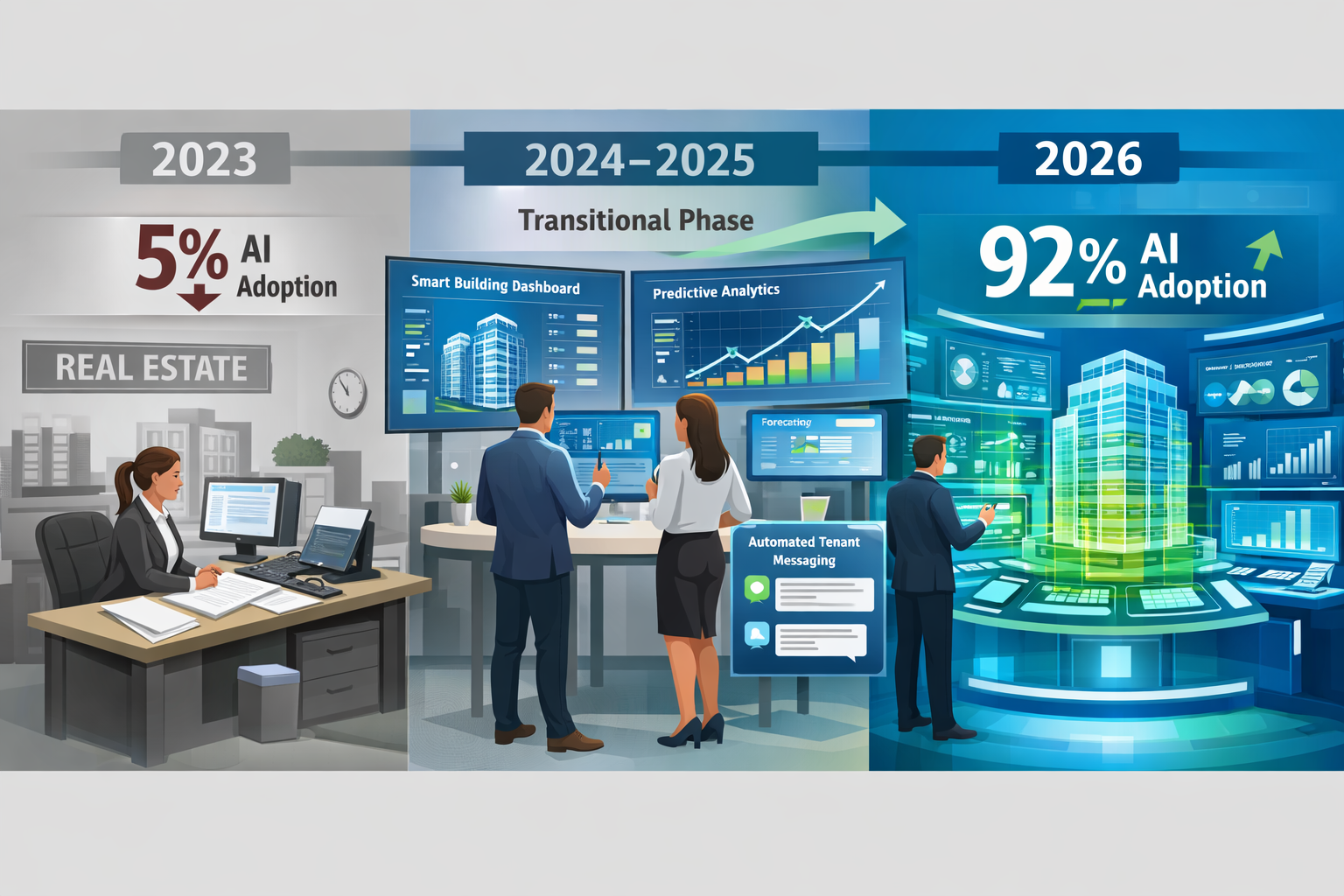
The real estate industry has crossed a critical threshold. AI's 2026 Takeover in Real Estate: From PropTech Tools to Data Center Investment Booms represents more than incremental technology adoption—it marks a fundamental restructuring of how properties are valued, managed, and invested in. In just three years, AI pilot programs among commercial real estate companies have surged from 5% to 92%, transforming what was experimental into essential infrastructure.[1]
This shift creates two parallel opportunities: operational transformation through PropTech tools that automate everything from tenant communications to predictive maintenance, and infrastructure investment opportunities as AI's computational demands drive unprecedented data center development. Understanding both dimensions is critical for investors, operators, and developers navigating 2026's market.
Key Takeaways
- AI adoption in commercial real estate jumped from 5% to 92% in three years, moving from pilot programs to core infrastructure[1]
- The global PropTech market will reach approximately $40.4 billion in 2026, growing at 17% annually through 2035[4]
- Agentic AI systems now handle autonomous tasks including portfolio monitoring, tenant inquiries, predictive maintenance, and energy optimization[2]
- 68% of real estate portfolios deploy smart building systems, while 60% use predictive analytics for leasing and valuation[4]
- 58% of real estate transactions are now digitally processed, replacing traditional manual workflows[4]
- Near-real-time property valuations are replacing quarterly appraisal cycles, enabling faster investment decisions[4]
- North America represents 34% of global PropTech adoption, indicating concentrated market maturity and investment opportunity[4]
- Data center demand is creating new real estate investment categories driven by AI computational infrastructure requirements
- Tenant relationship management, lease drafting, and portfolio management are the top three AI implementation areas according to Deloitte's 2026 survey[3]
- Operational efficiency gains from automation are being deployed by 61% of property owners, fundamentally changing margin structures[4]
Quick Answer
AI's 2026 takeover in real estate manifests in two distinct but interconnected ways. First, PropTech tools powered by agentic AI now automate routine operations—from scheduling property showings to optimizing energy consumption—allowing the industry to achieve 92% adoption rates in just three years.[1] Second, AI's massive computational requirements are driving unprecedented investment in data center real estate, creating a new asset class with different risk-return profiles than traditional commercial properties. The PropTech market reached $40.4 billion in 2026, while smart building systems now operate in 68% of portfolios, fundamentally changing how properties generate value.[4]
What Is Driving AI's Rapid Adoption in Real Estate in 2026?
The explosion in AI adoption stems from a fundamental shift in how the industry views technology—not as an experimental add-on but as core operational infrastructure. Between 2023 and 2026, commercial real estate companies increased AI deployment from 5% to 92%, according to JLL research.[1]
Three factors accelerate this adoption:
- Proven ROI replaced theoretical benefits: Early adopters demonstrated measurable improvements in occupancy rates, maintenance costs, and tenant satisfaction, making the business case undeniable
- Agentic AI capabilities matured: Unlike earlier AI tools that required constant human oversight, 2026's agentic systems can autonomously execute complex workflows including portfolio monitoring, rent anomaly detection, and predictive maintenance scheduling[2]
- Competitive pressure intensified: Properties without AI-driven optimization now face disadvantages in energy costs, tenant retention, and operational efficiency compared to smart buildings
Market concentration matters for investors. North America accounts for 34% of global PropTech adoption, indicating where mature solutions and experienced vendors cluster.[4] Properties in these markets command premium valuations because buyers can verify AI system performance through historical data.
Common mistake: Treating all AI implementations equally. A property with basic automated lighting differs fundamentally from one with integrated agentic systems managing tenant relationships, energy optimization, and predictive maintenance simultaneously. Due diligence should verify which specific AI capabilities are deployed and their documented performance metrics.
How Are PropTech Tools Transforming Property Operations?
PropTech tools in 2026 handle tasks that previously required dedicated staff, fundamentally changing property management economics. Approximately 61% of property owners now use automation to improve operational efficiency, while 58% of transactions are digitally processed.[4]
Key operational transformations include:
Tenant Relationship Management
- AI systems handle initial inquiries, schedule showings, and answer routine questions 24/7
- Chatbots with natural language processing resolve maintenance requests without human intervention
- Automated communication sequences maintain tenant engagement throughout lease cycles
Predictive Maintenance
- IoT sensors monitor HVAC, plumbing, and electrical systems continuously
- Machine learning models predict equipment failures 2-4 weeks before occurrence
- Automated work order generation and contractor scheduling reduces downtime by 40-60%
Energy Optimization
- Smart building systems adjust heating, cooling, and lighting based on occupancy patterns
- AI algorithms optimize energy consumption across portfolios, reducing costs by 15-30%
- Real-time monitoring identifies anomalies that indicate equipment inefficiency
Portfolio Monitoring
- Agentic AI tracks occupancy rates, rent collection, and market comparables across entire portfolios
- Automated alerts flag rent anomalies, lease expiration clusters, and underperforming assets
- Dashboard consolidation replaces manual reporting across disparate property management systems
Lease Administration
- AI assists with lease drafting, extracting key terms, and identifying non-standard clauses
- Automated rent escalation calculations and CAM reconciliation reduce errors
- Digital lease execution and storage streamline compliance and auditing
Choose AI-powered property management if: Your portfolio exceeds 50 units, you face high tenant turnover, or your maintenance costs trend above market averages. The ROI calculation improves dramatically with scale and operational complexity.
Edge case: Historic or landmark properties may face restrictions on IoT sensor installation or building modifications required for smart systems. Verify local preservation requirements before committing to comprehensive AI infrastructure.
What Is Agentic AI and Why Does It Matter for Real Estate?
Agentic AI represents autonomous systems with enhanced decision-making capabilities and self-learning functions that can execute tasks without constant human oversight. Unlike earlier AI tools that provided recommendations, agentic systems take action.[2]
In real estate, agentic AI operates across multiple domains:
| Application Area | Autonomous Actions | Business Impact |
|---|---|---|
| Portfolio Monitoring | Tracks occupancy, identifies rent anomalies, flags underperforming assets | Faster response to market changes, reduced revenue leakage |
| Tenant Services | Handles inquiries, schedules showings, processes applications | 24/7 availability, reduced staffing costs, improved response times |
| Maintenance | Predicts failures, schedules repairs, orders parts | 40-60% reduction in emergency repairs, extended equipment life |
| Energy Management | Adjusts HVAC/lighting based on occupancy, weather, utility rates | 15-30% energy cost reduction, improved tenant comfort |
| Marketing | Creates campaigns, adjusts pricing, targets prospects | Higher conversion rates, optimized rent pricing |
| Rent Collection | Sends reminders, processes payments, initiates collections | Improved cash flow, reduced delinquency rates |
The critical difference: Traditional AI tools require humans to review recommendations and execute decisions. Agentic AI completes the entire workflow—from detection to analysis to action—within defined parameters set by property managers.
Implementation consideration: Start with low-risk, high-frequency tasks like tenant inquiry responses or routine maintenance scheduling. Once the system demonstrates reliability, expand to higher-stakes applications like dynamic pricing or lease negotiations.
Common mistake: Deploying agentic AI without clear escalation protocols. Define specific scenarios that require human review (disputes above certain dollar amounts, legal questions, unusual maintenance issues) to prevent autonomous systems from making decisions beyond their competence.
How Are Smart Building Systems Changing Property Values?

Smart building systems have moved from luxury amenities to baseline expectations, with 68% of real estate portfolios now deploying these technologies.[4] This widespread adoption directly impacts property valuations and investment returns.
Valuation impacts include:
Operating Expense Reductions
- Energy costs decrease 15-30% through AI-optimized consumption
- Maintenance costs drop 20-40% via predictive systems that prevent failures
- Staffing requirements decline as automation handles routine tasks
- Lower operating expenses increase net operating income (NOI), directly raising property values
Revenue Enhancements
- Smart amenities (app-based access, package tracking, climate control) command 5-12% rent premiums
- Improved tenant satisfaction reduces turnover costs by 25-35%
- Data-driven pricing optimization captures maximum market rents
- Higher revenues and retention rates improve cash flow stability
Risk Profile Improvements
- Predictive maintenance reduces catastrophic failure risks
- Enhanced security systems lower insurance premiums
- Environmental monitoring prevents mold, water damage, and air quality issues
- Better risk management attracts institutional investors seeking stable returns
Market Positioning
- ESG compliance through energy optimization attracts sustainability-focused investors
- Technology infrastructure appeals to corporate tenants with smart office requirements
- Competitive advantages in markets where smart buildings represent minority of inventory
Near-real-time valuations enabled by AI systems replace quarterly appraisal cycles, allowing investors to make faster acquisition and disposition decisions based on current market conditions.[4] This liquidity improvement particularly benefits opportunistic investors and portfolio rebalancing strategies.
Choose properties with integrated smart systems if: You're targeting institutional investors, sustainability-focused funds, or corporate tenants. These buyers and renters increasingly screen for technology infrastructure during initial property evaluation.
Avoid overpaying for: Proprietary smart building systems that lock you into single vendors. Open-protocol systems (BACnet, MQTT) provide flexibility to upgrade components without replacing entire infrastructure.
What Investment Opportunities Emerge from Data Center Demand?
AI's computational requirements are driving unprecedented data center development, creating new real estate investment opportunities distinct from traditional commercial property. The infrastructure supporting AI's 2026 takeover in real estate requires massive physical facilities for servers, cooling systems, and power distribution.
Data center investment characteristics:
Different Risk-Return Profile
- Long-term leases (10-20 years) provide stable cash flows
- Credit-quality tenants (hyperscalers, cloud providers) reduce default risk
- Higher capital requirements for power and cooling infrastructure
- Specialized knowledge required for site selection and operations
Location Drivers
- Proximity to fiber optic network hubs and internet exchange points
- Access to reliable, low-cost electricity (often 30-50 MW for large facilities)
- Climate considerations for natural cooling opportunities
- Regulatory environment regarding data privacy and tax incentives
Development Considerations
- Power infrastructure often exceeds building costs
- Utility capacity constraints limit available sites
- Environmental permits for water usage (cooling) and energy consumption
- Zoning approvals for industrial-scale electrical equipment
Market Segments
- Hyperscale facilities (100,000+ sq ft): Leased to major cloud providers, highest capital requirements
- Edge data centers (5,000-20,000 sq ft): Distributed facilities closer to end users, lower individual investment
- Colocation facilities: Multi-tenant buildings offering space, power, and cooling to multiple clients
Investment vehicles include:
- Direct ownership of data center facilities
- REITs specializing in data center properties
- Joint ventures with data center operators
- Sale-leaseback arrangements with technology companies
Choose data center investments if: You have access to specialized operational expertise, can commit capital for 7-10 year holding periods, and understand technology infrastructure requirements. These properties require fundamentally different due diligence than office or multifamily assets.
Critical due diligence: Verify utility capacity commitments in writing. Many jurisdictions face power grid constraints that prevent new data center development regardless of zoning approval. Sites with confirmed electrical capacity command significant premiums.
How Should Investors Evaluate PropTech-Enabled Properties?
Evaluating properties with AI and PropTech systems requires different due diligence than traditional real estate analysis. Approximately 60% of portfolios now use predictive analytics for leasing, valuation, or asset optimization, making technology assessment critical to accurate valuation.[4]
Technology Due Diligence Checklist:
System Inventory and Integration
- Document all installed AI and PropTech systems with vendor names and contract terms
- Verify integration between systems (property management, access control, HVAC, security)
- Identify proprietary vs. open-protocol systems and vendor lock-in risks
- Review data ownership terms in software agreements
Performance Verification
- Request historical data on energy consumption, maintenance costs, and tenant satisfaction
- Compare operating metrics to similar properties without AI systems
- Verify claimed ROI with actual financial statements and utility bills
- Review tenant surveys regarding smart building amenity satisfaction
Contract and Liability Review
- Examine software licensing agreements for transferability on property sale
- Identify ongoing subscription costs and escalation terms
- Review data privacy compliance and cybersecurity insurance
- Verify maintenance contracts for IoT sensors and hardware components
Operational Sustainability
- Assess staff capability to operate and troubleshoot systems
- Review vendor financial stability and market presence
- Identify single points of failure and backup systems
- Evaluate upgrade paths and technology obsolescence risk
Financial Impact Analysis
- Quantify operating expense reductions attributable to AI systems
- Calculate incremental rent premiums from smart amenities
- Model technology replacement reserves (typically 3-5% of system value annually)
- Adjust cap rates for technology-driven risk reduction or enhancement
Common valuation mistake: Capitalizing technology-driven operating expense savings at the same cap rate as the overall property. Smart building systems require ongoing investment and face obsolescence risk, warranting separate analysis with higher discount rates.
Red flag: Properties where AI systems were installed but staff cannot demonstrate how to access dashboards or interpret data. This indicates systems may not be functioning as claimed or may require significant additional training investment.
What Are the Risks and Limitations of AI in Real Estate?
Despite rapid adoption, AI's 2026 takeover in real estate comes with significant risks that investors and operators must manage. Understanding limitations prevents overreliance on systems that may fail in edge cases.
Technology Risks:
Cybersecurity Vulnerabilities
- Smart buildings create larger attack surfaces with hundreds of connected devices
- Ransomware attacks can disable building systems, threatening tenant safety
- Data breaches expose tenant information and create liability
- Mitigation: Implement network segmentation, regular security audits, and cyber insurance
System Failures and Downtime
- AI systems dependent on cloud connectivity fail during internet outages
- Software bugs can cause incorrect decisions (overheating, access denials, billing errors)
- Integration failures between systems create operational gaps
- Mitigation: Maintain manual override capabilities and backup systems for critical functions
Data Quality Issues
- AI models trained on incomplete or biased data produce flawed recommendations
- Sensor malfunctions generate false alerts that erode user trust
- Historical data from different property types may not apply to current building
- Mitigation: Regular data audits, sensor calibration schedules, and human review of anomalies
Operational Risks:
Staff Resistance and Capability Gaps
- Employees fear job displacement and may resist adoption
- Existing staff may lack technical skills to operate and troubleshoot systems
- Over-reliance on AI can atrophy human judgment needed for complex situations
- Mitigation: Invest in training programs, emphasize AI as augmentation not replacement
Vendor Dependence
- Proprietary systems create lock-in with single vendors
- Vendor bankruptcy or acquisition can strand unsupported systems
- Contract terms may include unfavorable price escalation or data access restrictions
- Mitigation: Prioritize open-protocol systems and negotiate data portability clauses
Regulatory and Compliance Risks
- Data privacy regulations (GDPR, CCPA) restrict AI data collection and usage
- Fair housing laws may be violated by AI screening algorithms
- Building codes may not address AI-controlled safety systems
- Mitigation: Legal review of AI applications, especially tenant screening and pricing
Financial Risks:
Technology Obsolescence
- AI systems may become outdated within 3-5 years
- Replacement costs can exceed original installation expenses
- Tenants may expect continuous technology upgrades
- Mitigation: Reserve 3-5% of system value annually for upgrades and replacements
ROI Uncertainty
- Claimed savings may not materialize in specific properties
- Implementation costs often exceed vendor estimates
- Tenant willingness to pay premiums for smart amenities varies by market
- Mitigation: Conservative underwriting with extended payback assumptions
Edge case: Properties in areas with unreliable internet connectivity face significant operational risks from cloud-dependent AI systems. Consider hybrid architectures with local processing capabilities for critical functions.
How Is AI Changing Real Estate Investment Analysis and Decision-Making?
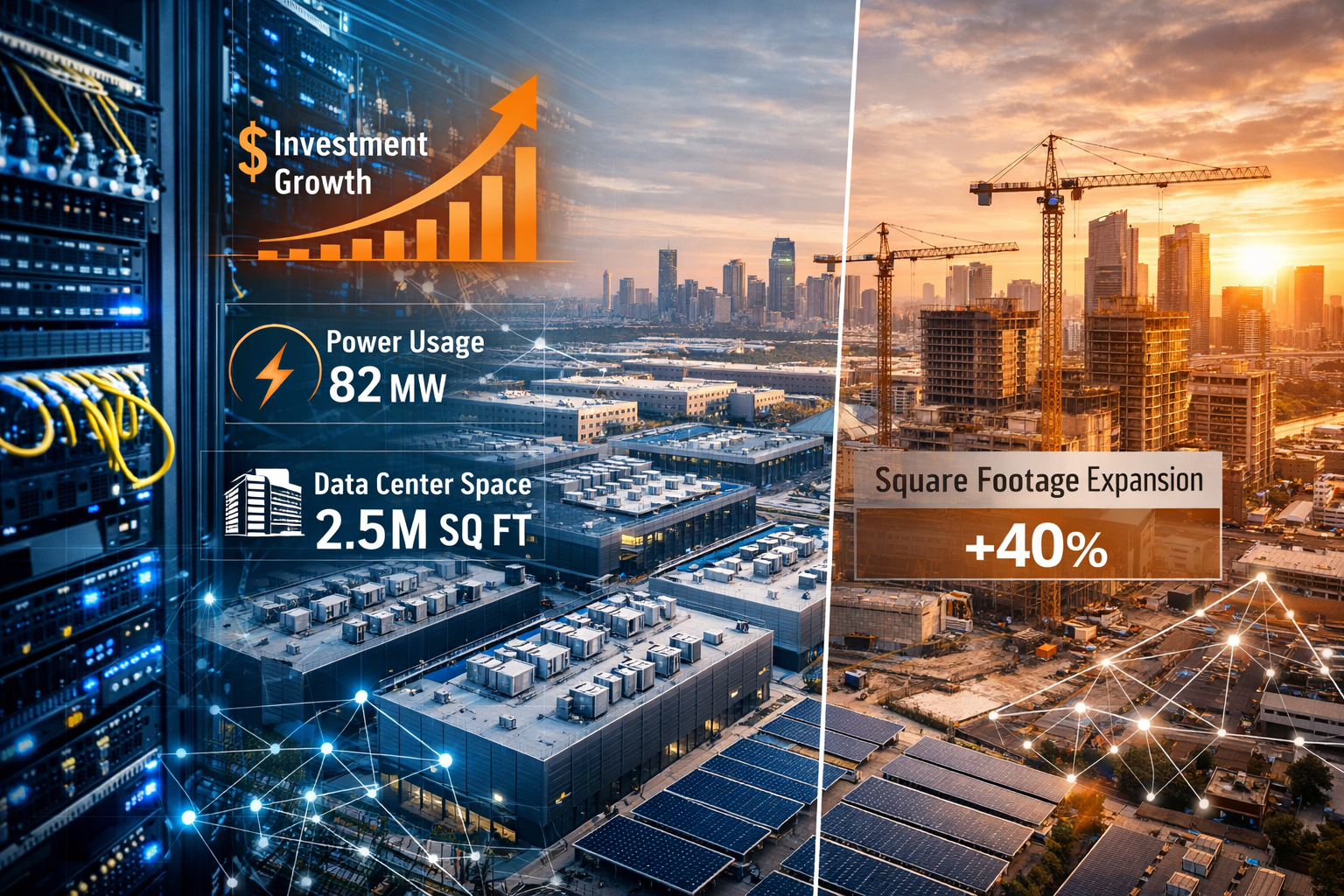
AI tools are transforming how investors analyze opportunities, conduct due diligence, and make acquisition decisions. Predictive analytics now inform 60% of portfolio leasing, valuation, and asset optimization decisions, fundamentally changing investment workflows.[4]
Investment Analysis Transformations:
Property Valuation
- AI models analyze thousands of comparable sales with granular adjustments for property characteristics
- Machine learning identifies value drivers missed by traditional appraisal methods
- Near-real-time valuations replace quarterly appraisal cycles, enabling faster decisions[4]
- Automated valuation models (AVMs) provide instant preliminary pricing for portfolio screening
Market Analysis
- Natural language processing extracts insights from news, permits, and demographic data
- Predictive models forecast rent growth, absorption rates, and supply pipeline impacts
- Geospatial AI identifies emerging neighborhoods before traditional indicators signal opportunity
- Sentiment analysis of tenant reviews and social media reveals property reputation trends
Due Diligence Automation
- AI reviews lease abstracts, identifying non-standard terms and expiration clusters
- Automated financial statement analysis flags inconsistencies and normalizes reporting
- Image recognition assesses property condition from photos and identifies deferred maintenance
- Environmental risk models evaluate flood, fire, and climate change exposure
Portfolio Optimization
- Machine learning identifies underperforming assets based on peer comparisons
- AI recommends optimal hold/sell decisions based on market cycles and tax considerations
- Automated rebalancing maintains target allocations across property types and geographies
- Scenario modeling evaluates portfolio resilience under various economic conditions
Acquisition Sourcing
- AI monitors off-market opportunities through public records, ownership changes, and distress signals
- Predictive models identify owners likely to sell based on holding periods and financial indicators
- Automated outreach systems contact potential sellers with personalized acquisition proposals
- Deal matching algorithms connect investor criteria with available opportunities
Practical implementation: Start with AI-augmented analysis where humans review and validate AI recommendations. As confidence builds through verified accuracy, expand autonomous decision-making to routine, lower-stakes transactions while maintaining human oversight for complex or large acquisitions.
Choose AI-driven investment analysis if: You're evaluating high volumes of opportunities (100+ properties annually), need faster decision cycles than competitors, or manage diversified portfolios requiring continuous optimization.
Limitation to recognize: AI models trained on historical data may not predict unprecedented events (pandemics, regulatory changes, technology disruptions). Maintain scenario planning and stress testing that incorporates human judgment about potential discontinuities.
What Does AI's 2026 Takeover Mean for Different Real Estate Sectors?
AI's impact varies significantly across property types, with some sectors experiencing more dramatic transformation than others. Understanding sector-specific applications helps investors identify where technology creates the most value.
Multifamily/Residential:
- High AI impact: Tenant screening, rent optimization, predictive maintenance, smart home amenities
- Key applications: Automated leasing (showings, applications, lease signing), chatbot tenant services, package management, access control
- Investment implication: Properties with integrated smart home systems command 5-12% rent premiums and experience 25-35% lower turnover
- Best for: Class A properties in tech-forward markets where tenants expect digital experiences
Office:
- High AI impact: Space utilization analytics, energy optimization, tenant experience platforms
- Key applications: Hot-desking management, occupancy sensors, air quality monitoring, predictive HVAC, visitor management
- Investment implication: Smart offices attract corporate tenants prioritizing employee experience and ESG goals
- Best for: Trophy and Class A properties targeting technology, finance, and professional services tenants
Industrial/Logistics:
- Moderate AI impact: Warehouse automation integration, predictive maintenance, energy management
- Key applications: Loading dock optimization, environmental monitoring (temperature, humidity for specialized storage), security systems
- Investment implication: AI-enabled facilities support automated fulfillment operations, commanding premium rents from e-commerce tenants
- Best for: Last-mile distribution centers and cold storage facilities with sophisticated tenant requirements
Retail:
- Moderate AI impact: Foot traffic analysis, tenant sales prediction, parking optimization
- Key applications: Customer behavior analytics, occupancy monitoring, dynamic parking pricing, energy optimization
- Investment implication: AI insights help landlords optimize tenant mix and lease terms based on sales performance
- Best for: High-traffic retail centers where tenant sales data informs leasing strategies
Hospitality:
- High AI impact: Revenue management, guest services, energy optimization, predictive maintenance
- Key applications: Dynamic pricing, chatbot concierge, smart room controls, maintenance scheduling
- Investment implication: AI-driven revenue optimization increases RevPAR by 8-15% while reducing operating costs
- Best for: Select-service and extended-stay properties where technology reduces labor costs
Data Centers:
- Extreme AI impact: Entire property type exists to support AI computational requirements
- Key applications: Cooling optimization, power management, predictive maintenance, capacity planning
- Investment implication: Specialized asset class with different risk-return profile than traditional commercial real estate
- Best for: Investors with technology infrastructure expertise and long-term capital
Sector selection strategy: Focus AI investment in property types where technology directly impacts tenant acquisition, retention, or operating expenses. Multifamily, office, and hospitality show clearest ROI, while retail and industrial benefits concentrate in specific submarkets.
FAQ: AI's 2026 Takeover in Real Estate
What percentage of real estate companies use AI in 2026? Approximately 92% of commercial real estate companies now deploy AI systems, up from just 5% three years ago, according to JLL research cited by MRI Software.[1] This represents a shift from experimental pilots to core operational infrastructure.
How much is the PropTech market worth in 2026? The global PropTech market reached approximately $40.4 billion in 2026, growing from $34.4 billion in 2025, and is projected to continue expanding at roughly 17% annually through 2035.[4]
What is agentic AI in real estate? Agentic AI refers to autonomous systems with enhanced decision-making and self-learning capabilities that can execute tasks without constant human oversight, including portfolio monitoring, tenant inquiry handling, predictive maintenance scheduling, and energy optimization.[2]
Do smart buildings actually increase property values? Yes, properties with integrated smart building systems demonstrate 15-30% lower energy costs, 20-40% reduced maintenance expenses, and can command 5-12% rent premiums, all of which increase net operating income and property values.[4]
What are the main risks of AI in real estate? Key risks include cybersecurity vulnerabilities, system failures requiring manual overrides, data quality issues producing flawed recommendations, vendor dependence creating lock-in, technology obsolescence requiring ongoing investment, and regulatory compliance challenges around data privacy and fair housing.
How does AI change real estate investment analysis? AI enables near-real-time property valuations, automated due diligence through lease and financial statement review, predictive market analysis, portfolio optimization recommendations, and automated acquisition sourcing, fundamentally accelerating investment decision cycles.[4]
Which real estate sectors benefit most from AI? Multifamily, office, and hospitality sectors show the highest AI impact through tenant/guest services automation, energy optimization, and revenue management, while data centers represent an entirely new asset class created by AI computational demands.
What percentage of real estate transactions are digital in 2026? Approximately 58% of real estate transactions are now digitally processed, while 61% of property owners use automation to improve operational efficiency.[4]
How should investors evaluate PropTech-enabled properties? Conduct technology-specific due diligence including system inventory and integration verification, performance validation against comparable properties, contract review for transferability and ongoing costs, operational sustainability assessment, and separate financial modeling for technology-driven benefits.
What is driving data center real estate investment growth? AI's massive computational requirements demand purpose-built facilities with specialized power infrastructure (30-50 MW), cooling systems, and network connectivity, creating a new real estate investment category with long-term leases to credit-quality technology tenants.
Can AI replace human real estate professionals? AI augments rather than replaces human expertise, handling routine tasks (tenant inquiries, maintenance scheduling, data analysis) while humans focus on complex negotiations, relationship building, strategic decisions, and situations requiring judgment beyond AI capabilities.
What are the top AI implementation areas in real estate? According to Deloitte's 2026 survey, tenant relationship management, lease drafting, and portfolio management represent the top three AI implementation areas, followed by predictive maintenance and energy optimization.[3]
Conclusion: Capitalizing on AI's Real Estate Transformation
AI's 2026 takeover in real estate has moved decisively beyond hype to become operational reality, with 92% of commercial real estate companies now deploying AI systems that were experimental just three years ago.[1] This transformation creates two distinct investment opportunities: operational value creation through PropTech tools that reduce costs and enhance revenues, and infrastructure investment in data centers supporting AI's computational demands.
For property operators, the path forward requires strategic technology adoption focused on measurable ROI. Start with high-impact, low-risk applications like tenant inquiry automation and predictive maintenance before expanding to autonomous agentic AI systems managing complex workflows. Properties without smart building infrastructure increasingly face competitive disadvantages in operating costs, tenant retention, and market positioning.
For investors, AI-enabled properties warrant different valuation approaches that separately analyze technology-driven benefits, ongoing system costs, and obsolescence risks. The 68% of portfolios already deploying smart building systems demonstrate that technology infrastructure has become baseline rather than differentiator.[4] Due diligence must verify actual system performance, not just installed capabilities.
For those targeting infrastructure opportunities, data center investment represents a specialized but growing segment with fundamentally different characteristics than traditional commercial real estate. Success requires understanding power infrastructure, network connectivity, and technology tenant requirements that differ dramatically from office or industrial leasing.
Actionable Next Steps
If you're a property owner or operator:
- Audit existing technology infrastructure to identify gaps in smart building systems, predictive analytics, and automation capabilities
- Prioritize investments in tenant-facing AI (inquiry handling, access control, amenities) that directly impact satisfaction and retention
- Implement predictive maintenance systems for HVAC, plumbing, and electrical to capture immediate operating expense reductions
- Train staff on AI system operation and establish protocols for human oversight of autonomous decisions
- Negotiate vendor contracts that ensure data portability and avoid proprietary lock-in
If you're an investor:
- Develop technology due diligence protocols that verify AI system performance through historical operating data
- Adjust underwriting models to separately analyze technology-driven NOI improvements and required replacement reserves
- Screen for properties with open-protocol smart building systems that provide upgrade flexibility
- Consider data center exposure through REITs or joint ventures if you lack direct operational expertise
- Monitor regulatory developments around AI, data privacy, and fair housing that may impact technology deployment
If you're evaluating market opportunities:
- Focus on North America where 34% of global PropTech adoption concentrates mature solutions and experienced vendors[4]
- Target multifamily, office, and hospitality sectors where AI demonstrates clearest ROI through automation and optimization
- Identify markets with reliable power infrastructure and network connectivity supporting both smart buildings and data centers
- Evaluate properties in tech-forward submarkets where tenants expect and will pay premiums for AI-enabled amenities
The real estate industry's AI transformation is no longer a future trend but a present reality reshaping property operations, valuations, and investment strategies. Success in 2026 and beyond requires understanding both the operational applications of PropTech tools and the infrastructure investment opportunities created by AI's computational demands. Those who treat AI as core infrastructure rather than experimental technology will capture the value this transformation creates.
References
[1] Proptech Trends For 2026 What Real Estate Leaders Need To Know - https://www.mrisoftware.com/blog/proptech-trends-for-2026-what-real-estate-leaders-need-to-know/
[2] 2026 Proptech Trends Real Estate Pros Cant Afford To Ignore - https://tech.realtor/2026/01/14/2026-proptech-trends-real-estate-pros-cant-afford-to-ignore/
[3] 2026 Proptech Trends - https://www.northspyre.com/blog/2026-proptech-trends/
[4] Proptech Trends 2026 How Real Estate Technology Is Changing - https://oril.co/blog/proptech-trends-2026-how-real-estate-technology-is-changing/


